

Keyword mapping is a vital component of search engine optimization (SEO), enabling businesses to assign specific keywords to targeted website pages to enhance structure, relevance, and performance. In today’s competitive digital landscape, ranking on search engine results pages (SERPs) drives traffic and conversions, making a well-crafted keyword map essential. At VisiBlitz, we simplify guest posting and SEO link building, with keyword mapping as the cornerstone of our strategy. This guide explores what keyword mapping is, why it’s critical, and provides a detailed step-by-step process to implement it effectively, ensuring your site maximizes its SEO potential.
What is Keyword Mapping?
Keyword mapping involves assigning specific keywords to individual website pages to optimize for search engines and align with user intent. While keyword research identifies terms your audience searches for, keyword mapping organizes them into a strategic framework, ensuring each page targets unique queries. This prevents overlap and boosts SEO efficiency.
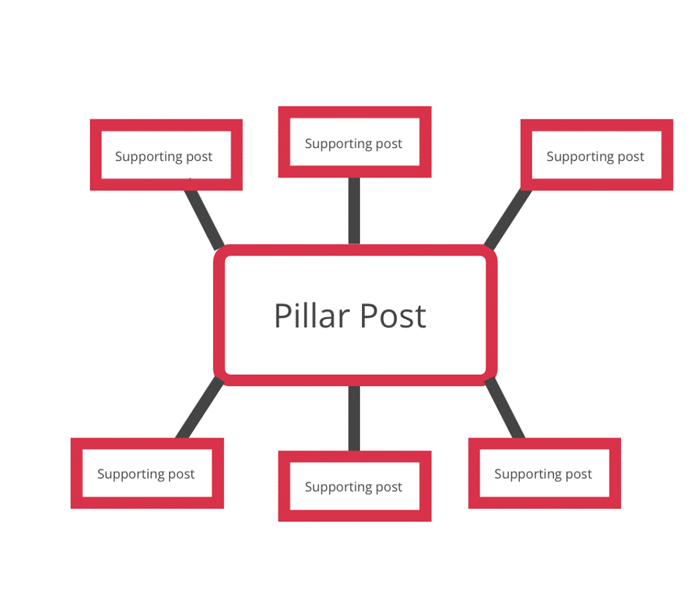
Imagine your website as a digital library, with each page addressing a specific topic. For example, “SEO services” might target a service page, while “how to do keyword mapping” suits a blog post. This clarity helps search engines like Google understand your site’s architecture and delivers relevant content to users. Backlinko reports that keyword mapping drives over 500,000 monthly organic sessions by ensuring content consistency. It supports topic clusters, where a “pillar page” (e.g., an SEO strategy guide) links to “cluster pages” (e.g., keyword clustering tips), building topical authority and improving rankings.
A keyword map is a documented framework tracking metrics like search volume and difficulty, guiding optimization. Search Engine Journal notes that this organization prevents ranking instability, where pages fluctuate due to unclear topical focus.
Why is Keyword Mapping Important for SEO?
Keyword mapping transforms scattered keywords into a cohesive strategy, addressing challenges like keyword cannibalization and content gaps. It ensures higher rankings and better user engagement. Here’s why it’s essential, backed by industry insights.
Builds a Logical Site Structure
A well-executed keyword map creates a clear hierarchy, enhancing user experience (UX) and crawlability. Assigning keywords to pages helps users find information—like a guide on content planning for SEO—without frustration. Mangools emphasizes that a logical structure improves indexing efficiency, increasing SERP visibility. A clear hierarchy signals which pages are most important, boosting their ranking potential.
Improves Internal Linking
Keyword mapping strengthens internal linking by connecting related pages, distributing “link equity.” Linking a blog on SEO keyword map to a guest posting service page keeps users engaged and signals relevance. WordStream highlights that optimized anchor texts reduce bounce rates and encourage exploration, turning clicks into conversions. This approach enhances site navigation and SEO performance.
Helps with Content Planning
Keyword mapping acts as a roadmap for content planning for SEO, identifying topics and gaps. Mapping keywords to pillar pages and topic clusters avoids redundancy and aligns with user needs. Neil Patel notes that this uncovers opportunities, such as targeting AI in SEO, ensuring content serves a purpose and maximizes traffic.
Facilitates Tracking and Management
Tracking SEO performance without a keyword map is challenging. A map enables monitoring with tools like Google Analytics or Ahrefs. If rankings drop for keyword clustering, you can optimize the specific page. Search Engine Journal stresses that this data-driven approach addresses issues like cannibalization swiftly, keeping your strategy agile.
Prevents Keyword Cannibalization
Keyword cannibalization occurs when multiple pages target the same term, confusing search engines and diluting rankings. Backlinko warns that this causes ranking fluctuations. A keyword map assigns unique keywords, ensuring clarity and preventing competition between pages, which stabilizes and improves rankings.
How to Do Keyword Mapping Step-by-Step
This step-by-step guide, informed by Backlinko, Search Engine Journal, WordStream, Mangools, and Neil Patel, ensures a robust keyword map.
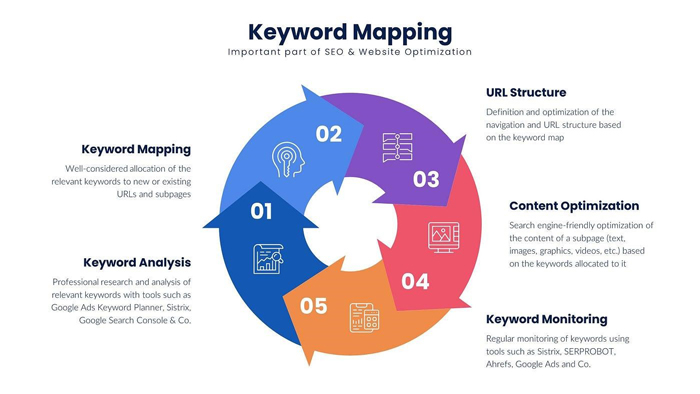
Step 1: Conduct Keyword Research
Start with comprehensive keyword research using tools like:
- SEMrush: Analyze volume, competition, and trends.
- Ahrefs: Identify competitor strategies.
- Google Keyword Planner: Discover high-intent terms.
- AnswerThePublic: Capture queries like “how to do keyword mapping.”
Focus on a mix of informational (e.g., “what is keyword mapping”), navigational (e.g., “VisiBlitz SEO services”), and transactional (e.g., “buy guest posts”) keywords. Backlinko suggests prioritizing moderate-volume, low-difficulty terms for quick wins. Document keywords with metrics in a spreadsheet for clarity.
Step 2: Group Keywords into Clusters
Organize keywords into keyword clusters based on topic, intent, and semantic relevance. For example:
- Cluster: SEO Strategy
- Primary: Keyword mapping
- Secondary: SEO keyword map, keyword clustering
- Cluster: Content Strategy
- Primary: Content planning for SEO
- Secondary: Pillar pages and topic clusters
Mangools recommends SERP analysis to confirm topical alignment; if keywords yield similar results, group them. Use SEMrush’s Keyword Strategy Builder or Ahrefs to automate clustering, saving time. Record clusters in a spreadsheet with volume and difficulty metrics.
Step 3: Assign Keywords to Target URLs
Assign clusters to URLs to avoid keyword cannibalization. Key tips:
- Match intent: Informational keywords to blogs, transactional to service pages.
- Prioritize value: High-traffic terms to pillar pages.
- Document in a spreadsheet: | URL | Primary Keyword | Secondary Keywords | Content Type | Notes | |—–|—————–|——————–|————–|——-| | visiblitz.net/blog/keyword-mapping | Keyword mapping | SEO keyword map, keyword clustering | Blog Post | Pillar page | | visiblitz.net/seo-services | SEO services | Content planning for SEO, pillar pages | Service Page | Transactional focus |
WordStream advises auditing with Screaming Frog to detect overlaps and ensure URLs incorporate primary keywords for clarity.
Step 4: Optimize On-Page Content
Optimize pages using your map. Incorporate primary keywords into:
- Title tags (<60 characters).
- Meta descriptions (150–160 characters, with a compelling CTA).
- H1 and H2 headings.
- Body content (naturally, avoiding stuffing).
- Image alt text (where relevant).
Include secondary keywords once per page to enhance relevance. Backlinko suggests updating “Status” and “Last Updated” fields in your map after optimization to track progress. Address content gaps by creating new pages for unmapped keywords.
Step 5: Monitor and Update Regularly
SEO is dynamic, requiring regular updates. Revisit your map every 3–6 months to:
- Research new trends using tools like Ubersuggest.
- Track rankings with SERPWatcher or Google Search Console.
- Adjust for algorithm changes or shifts in user behavior.
Neil Patel emphasizes that consistent tracking keeps your strategy competitive, allowing you to pivot quickly and maintain high rankings.
Best Practices and Advanced Tips for Keyword Mapping
To maximize your keyword map’s effectiveness, incorporate these advanced strategies from industry leaders.
Avoid Keyword Cannibalization
Search Engine Journal warns that keyword cannibalization confuses search engines, leading to unstable rankings. Use Google Search Console or Sitebulb to identify overlaps. Solutions include merging content, using 301 redirects, or reassigning keywords. For example, consolidate competing pages for “keyword mapping” into one authoritative guide to strengthen its ranking potential.
Identify Content Opportunities
Your map highlights gaps—keywords competitors rank for but you don’t. Ahrefs’ Content Gap tool reveals these opportunities. Create content for gaps, such as AI-driven SEO topics, to boost authority. Backlinko credits this approach for achieving 500,000+ monthly sessions, demonstrating its impact on traffic growth.
Optimize and Plan Content Strategically
Regularly audit your map to:
- Refresh underperforming pages with new keywords or CTAs.
- Consolidate thin content to strengthen topical authority.
- Plan new pages for emerging trends, such as voice search optimization.
Mangools suggests using SERP analysis to determine if keywords need separate pages or can be combined. For example, if “keyword mapping” and “SEO keyword map” yield similar SERPs, use one page with the latter as a secondary keyword.
Leverage Automation Tools for Efficiency
Tools like SEMrush’s Keyword Strategy Builder or Surfer SEO’s Topic Explorer automate clustering and suggest pillar and cluster topics. Neil Patel’s Ubersuggest provides keyword visualization to uncover related queries, streamlining research. These tools enhance precision, especially for large websites with complex structures.
How VisiBlitz Can Help
At VisiBlitz, our motto is GUEST POSTING MADE SIMPLE. Our marketplace connects you to premier publishers for SEO link building, digital PR, and sponsored content. By integrating your keyword map with our services, you can select publishers that align with your target keywords, boosting rankings. Our complementary offerings, such as SEO audits and content creation, ensure a robust strategy. With flexible payments and a vast network, we simplify success in the digital arena.
CTA: Ready to master SEO? Download our free Keyword Mapping Template at visiblitz.net/templates and visit visiblitz.net to explore our marketplace today!
FAQ
What’s the difference between keyword research and keyword mapping?
Research identifies terms; mapping assigns them strategically to pages.
How often should I update my keyword map?
Every 3–6 months to adapt to trends and algorithm changes.
What tools are ideal for keyword mapping?
SEMrush, Ahrefs, Google Keyword Planner, and Google Sheets.
How does guest posting integrate with keyword mapping?
Mapping keywords to guest posts ensures backlinks align with SEO goals.
Can keyword mapping improve user experience?
Yes, by creating a logical site structure that guides users to relevant content.