

Search engine optimization has evolved into a highly analytical and performance-driven discipline. Today, successful SEO strategies are built on data, consistency, and continuous measurement rather than assumptions or isolated tactics. At the core of this structured approach lies a fundamental concept: SEO KPI. Without clearly defined SEO KPIs, even well-executed optimization efforts can lack direction and measurable impact.
This article explores what SEO KPI means, why it matters, which indicators are most valuable, and how businesses can use them to build sustainable visibility and brand awareness—particularly in competitive digital markets.
What Is an SEO KPI?
An SEO KPI (Key Performance Indicator) is a measurable value used to evaluate the effectiveness of SEO activities in relation to predefined objectives. These indicators help businesses understand whether their efforts in content creation, technical optimization, and link building are contributing to meaningful growth.
Unlike general SEO metrics, a true SEO KPI is outcome-focused. While metrics provide context, KPIs connect performance to goals such as visibility, engagement, or conversions. A strong SEO KPI framework allows marketers to move from observation to informed action.
A well-defined SEO KPI should be:
- Clearly measurable
- Directly linked to business goals
- Consistent over time
- Useful for optimization decisions
Why SEO KPI Is Essential
Consider two websites with similar levels of organic traffic. On the surface, their performance appears identical. However, when analyzed through SEO KPIs, major differences often emerge. One site may attract highly relevant users who engage with content and convert, while the other generates volume without impact. Without KPI-driven analysis, both sites might be evaluated as “successful,” despite delivering very different business outcomes. This example highlights why SEO KPIs are essential for understanding performance beyond raw numbers.
SEO without KPIs is difficult to scale or justify. Implementing a clear SEO KPI structure provides several strategic advantages:
Data-Driven Strategy
SEO KPIs replace assumptions with evidence. Instead of guessing what works, teams can prioritize tactics that deliver measurable results.
Performance Transparency
By tracking SEO KPIs, it becomes easier to identify strengths, weaknesses, and opportunities across different SEO initiatives.
Business Alignment
SEO KPI selection ensures that optimization efforts support broader goals such as brand awareness, market expansion, or lead generation.
Accountability and Reporting
KPIs create a shared language between marketers, stakeholders, and decision-makers, making performance easier to communicate.
KPI vs Metric in SEO
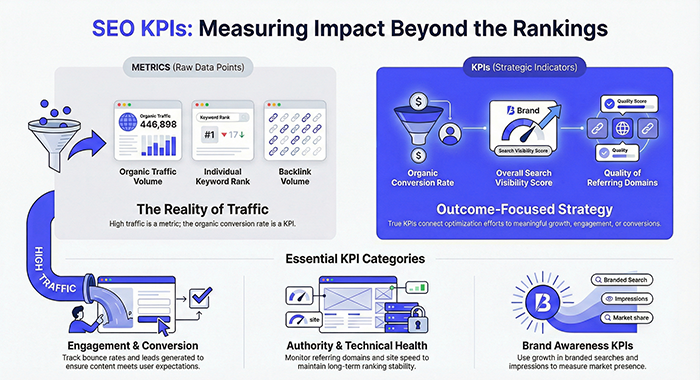
Confusing metrics with KPIs frequently leads to misleading SEO reports. When teams focus on metrics that look impressive but lack strategic relevance, performance may appear positive while underlying issues remain unresolved. This can create false confidence, delay necessary optimizations, and increase pressure on SEO teams to deliver growth based on the wrong indicators. A clear distinction between metrics and SEO KPIs ensures that reporting supports accurate interpretation and better decision-making.
Not all SEO data points qualify as KPIs. Understanding the distinction is critical for accurate evaluation.
- Metrics are raw data points such as impressions or clicks.
- SEO KPIs measure progress toward strategic objectives.
For example:
- Organic traffic volume is a metric
- Organic conversion rate is an SEO KPI
Focusing on KPIs rather than isolated metrics helps avoid misleading conclusions.
Key Categories of SEO KPI
SEO KPIs can be grouped into several core categories, each reflecting a different aspect of performance.
1. Organic Traffic SEO KPI
Organic traffic is often the first signal of SEO progress, but it must be evaluated thoughtfully.
Key organic traffic SEO KPIs include:
- Organic sessions
- Organic users
- Organic traffic growth rate
These KPIs indicate whether optimization efforts are increasing visibility and attracting relevant audiences over time.
2. Keyword Performance SEO KPI
It is also important to recognize that traffic growth alone does not guarantee SEO success. An increase in organic sessions may include users whose intent does not align with business goals. Without segmenting traffic by intent, geography, or behavior, teams risk overestimating performance. Evaluating organic traffic through relevant SEO KPIs helps distinguish between meaningful growth and volume that fails to contribute to engagement or brand awareness.
Keyword rankings remain relevant, but modern SEO KPI analysis goes beyond individual positions.
Important keyword-related SEO KPIs:
- Average keyword position
- Percentage of keywords ranking in the top 3 or top 10
- Overall search visibility score
Rather than focusing on a single keyword, effective SEO KPI strategies evaluate keyword clusters aligned with user intent.
3. Engagement-Based SEO KPI
Search engines increasingly reward websites that deliver strong user experiences. Engagement KPIs reflect how users interact with content.
Common engagement SEO KPIs include:
- Bounce rate
- Average time on page
- Pages per session
Positive engagement signals suggest that content meets user expectations and supports long-term ranking stability.
4. Conversion-Focused SEO KPI
For many businesses, conversions represent the most valuable SEO KPIs.
Examples include:
- Leads generated from organic traffic
- Sales attributed to SEO
- Form submissions or sign-ups
These indicators demonstrate whether SEO contributes to real business outcomes rather than surface-level visibility.
5. Authority and Link Building SEO KPI
Strategic link acquisition focuses on relevance, context, and long-term authority rather than sheer volume. Large quantities of low-quality backlinks may temporarily inflate metrics without strengthening trust or visibility. In contrast, editorial links from credible and contextually relevant publications, such as those obtained through Guest post opportunities, contribute directly to sustainable SEO KPI improvement. This shift toward quality-driven link building reflects a broader industry trend where authority is measured by influence and relevance rather than numerical scale.
Backlinks remain a critical ranking factor, but their impact depends on quality and relevance.
Key authority-related SEO KPIs include:
- Number of referring domains
- Backlink relevance and trust
- Domain authority or domain rating growth
As link authority continues to be a critical SEO KPI, many brands are shifting toward structured and data-driven outreach rather than ad-hoc link building. Marketplaces like VisiBlitz support this approach by connecting brands with verified digital publishers across the GCC and MENA region. By simplifying access to relevant media outlets and offering complementary SEO services such as audits and content support, platforms of this kind help marketers align link acquisition efforts with measurable SEO KPIs instead of relying on volume alone.
6. Technical SEO KPI
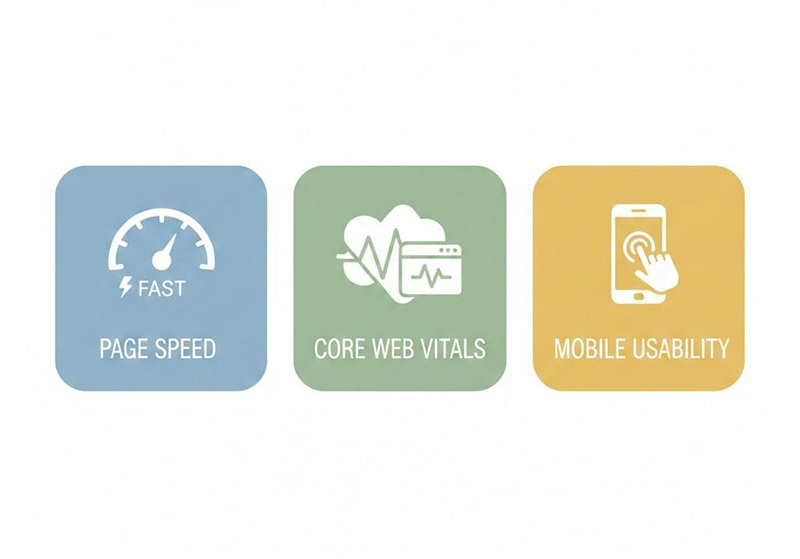
Technical performance directly affects how search engines crawl and index a website.
Essential technical SEO KPIs include:
- Page load speed
- Core Web Vitals
- Crawl errors and index coverage
- Mobile usability
Neglecting technical SEO KPIs can undermine even the strongest content and link-building strategies.
Choosing the Right SEO KPI for Your Business
Not every SEO KPI is relevant to every organization. KPI selection should be guided by:
- Business objectives
- Industry competitiveness
- Target audience and geography
- Stage of brand maturity
For awareness-driven strategies, visibility and engagement KPIs often take priority over direct conversions. Selecting the right SEO KPI ensures that performance is evaluated fairly and accurately.
SEO KPI for Brand Awareness Campaigns
When the primary objective is awareness, success cannot be measured solely by sales or leads.
Awareness-focused SEO KPIs include:
- Growth in branded search queries
- Increase in organic impressions
- Visibility across authoritative publications
- Referral traffic from editorial placements
These indicators reflect how effectively SEO contributes to brand recognition, trust, and market presence.
Common SEO KPI Mistakes
Even experienced teams can misinterpret SEO performance if KPIs are poorly defined.
Common SEO KPI mistakes include:
- Overemphasizing vanity KPIs
- Tracking too many KPIs without prioritization
- Evaluating performance over short timeframes
- Ignoring qualitative signals such as relevance and intent
Avoiding these pitfalls allows SEO KPI analysis to remain strategic rather than reactive.
Tools for Measuring SEO KPI
Accurate measurement requires reliable tools and consistent analysis.
Commonly used platforms include:
- Google Search Console
- Google Analytics
- SEO platforms such as Ahrefs or SEMrush
- Technical SEO audit tools
When combined with structured services like SEO audits, content optimization, and editorial link placement, these tools help transform SEO KPI data into actionable insights.
SEO KPI in Competitive Digital Markets
In competitive digital environments, marginal improvements can make a significant difference. Brands operating in crowded markets must rely on precise SEO KPI tracking to remain efficient.
SEO KPI analysis enables businesses to:
- Allocate resources more effectively
- Identify high-performing content formats
- Strengthen authority through relevant publications
- Improve long-term organic growth stability
Organizations that adopt a KPI-driven mindset tend to outperform competitors that rely on intuition alone.
The Long-Term Role of SEO KPI
SEO is a long-term investment, and its value compounds over time. Without consistent SEO KPI monitoring, it becomes difficult to evaluate progress or justify continued investment.
A mature SEO KPI framework supports:
- Continuous optimization
- Strategic planning
- Cross-team alignment
- Predictable growth trajectories
By focusing on relevant KPIs, businesses can turn SEO into a sustainable growth channel rather than a cost center.
Final Thoughts
As brands grow and mature, their SEO KPIs should evolve accordingly. Early-stage organizations may prioritize visibility and traffic acquisition, while established brands often shift focus toward engagement, authority, and impact. Treating SEO KPIs as static benchmarks can limit long-term growth. Regularly reassessing and refining KPI priorities ensures that SEO strategies remain aligned with changing business objectives and market conditions.
SEO success is not defined by rankings alone. It is measured by impact, relevance, and alignment with business goals. A well-structured SEO KPI framework provides clarity, accountability, and direction for long-term optimization efforts.
Whether the goal is increasing brand awareness, expanding into new markets, or strengthening digital authority, SEO KPIs enable informed decision-making and sustainable growth. In an increasingly competitive digital landscape, performance-driven SEO is no longer optional—it is essential.