
If you’ve ever tried to learn SEO seriously, you probably noticed something right away: there’s just too much information out there. Blogs often contradict each other. Videos promise quick results. And every now and then, someone on Twitter declares that SEO is dead—again. When I first started, I spent hours hopping from one blog to another, only to realize that much of the advice was outdated or confusing.
The real challenge isn’t motivation—it’s knowing who to trust. Most beginners don’t fail at SEO because it’s too hard; they fail because they follow the wrong resources. Outdated guides, recycled tips, or content from people who don’t actually work with search engines can easily lead you astray.
That’s why it’s smarter to focus on quality over quantity. This guide points to the best resources for learning SEO—sources that are practical, up-to-date, and backed by real experience. Whether you’re just starting or already know the basics, relying on the best resources for learning SEO will help you learn faster, avoid wasted effort, and build knowledge that really lasts.
Official SEO Resources
Skipping official documentation is like trying to build a house without a blueprint—it might seem fine at first, but eventually, mistakes show up. Relying only on blogs, videos, or social media threads can leave you confused or misled. To really learn SEO, start with the official sources. They give accurate, up-to-date information that forms a strong foundation and helps you avoid common mistakes.
For beginners and even experienced learners, focusing on the best resources for learning SEO—including official guides—is key. Blogs and tutorials can be useful, but nothing beats the original sources. By combining these with the best resources for learning SEO, you’ll build a solid, lasting understanding of SEO and save yourself a lot of wasted effort.
Google Search Central
Google Search Central is the foundation of modern SEO knowledge, explaining how Google crawls pages, evaluates content quality, and decides what belongs in search results. Understanding how Google indexes a blog post can save hours of trial and error, yet many beginners skip these docs because they seem technical. Reading them early prevents confusion later, and you don’t need to tackle everything at once—start with crawling and indexing basics, then return to other topics as questions arise. Among all the options out there, Google Search Central is truly one of the best resources for learning SEO, offering clear, accurate guidance straight from the source.
Google Search Console Help
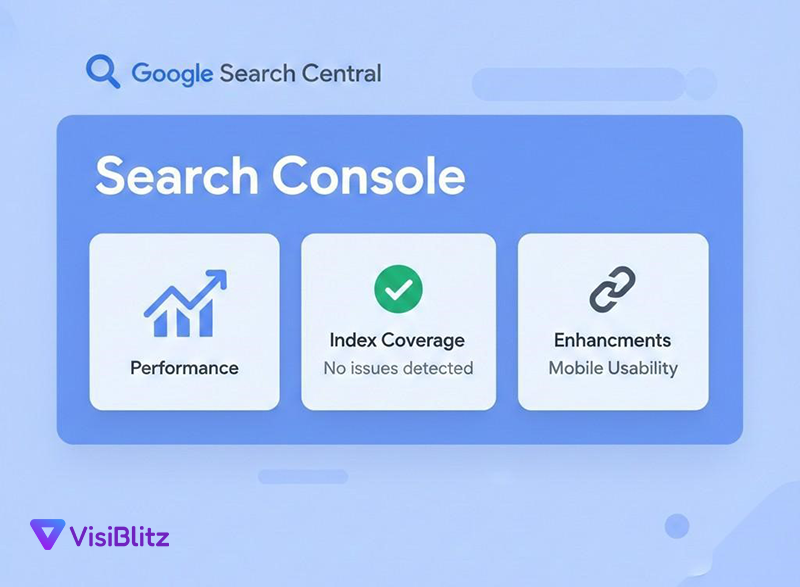
Search Console documentation bridges theory and practice. It explains errors, performance data, and indexing issues using real examples from actual websites.
A small observation: I once couldn’t figure out why a page wasn’t ranking until I checked Search Console—it pointed out a technical issue no blog had mentioned.
Bing Webmaster Guidelines
Even if Google dominates search, Bing’s guidelines reinforce core SEO principles and often present them in slightly different ways. Reading them helps confirm which practices are foundational rather than platform-specific tricks.
Official documentation may feel slow, but it keeps your learning grounded in reality.
Trusted SEO Blogs and Websites
Blogs can translate complex SEO ideas into practical, actionable advice—but only when written by people who actively test their theories, not just repeat popular trends. Trusted blogs provide insights based on real experiments, case studies, and data analysis, helping readers understand how strategies work in practice. Following these blogs regularly allows beginners and professionals alike to stay updated, learn new techniques, and gain a clearer understanding of SEO principles. Some of the best resources for learning SEO are these well-tested, experience-driven blogs, which make building long-term knowledge both effective and reliable.
Moz Blog
Moz is a very beginner-friendly SEO resource that explains concepts clearly and in an easy-to-understand way. Their Beginner’s Guide is especially helpful for learning keyword research, on-page SEO, and basic SEO workflows. The guide uses clear examples and visuals, which make complex ideas easier to grasp. Personally, I found their visual examples extremely useful when I first tried optimizing a blog post. Following Moz consistently can help beginners build a solid foundation, understand core principles, and apply SEO techniques effectively to their own websites.
Search Engine Journal
Search Engine Journal is an excellent resource for staying updated with the latest industry news and practical SEO strategies. Once you understand the basics of SEO, this site helps you see how updates and changes affect real websites. Reading a few articles each week is usually enough to stay informed, learn new techniques, and observe how professionals apply strategies in different scenarios. This approach gradually helps you improve your own SEO skills and make better decisions.
Ahrefs Blog
Ahrefs is a data-driven SEO resource that provides valuable insights for marketers and website owners. Their articles often include experiments, real-world examples, and charts that clearly explain complex concepts. If you want to understand content strategy, link building, or competitive analysis, following Ahrefs is highly recommended. One practical tip is to choose a few trusted authors or specific topics and stick with them consistently, rather than jumping from one article to another. This focused approach helps you build deeper knowledge and apply strategies more effectively to your own projects.
SEO Courses and Training Programs
Courses provide valuable structure, which is especially helpful for beginners learning SEO. However, no course can replace hands-on practice. Applying what you learn through real projects, experiments, and testing is essential. Combining structured courses with practical experience is one of the best resources for learning SEO, helping you understand concepts deeply and build effective, long-term skills.
Beginner courses help you:
- Understand essential SEO terminology
- Learn common workflows
- Grasp key principles behind effective SEO
Intermediate courses dive deeper into:
- Technical SEO
- Analytics
- Content strategy
- Site optimization techniques
- Best applied when working on a real website
Caution: Some courses focus heavily on tools you may never use, so it’s important to choose programs that match your goals. No course can guarantee rankings, but the right training helps you make smarter decisions, avoid common mistakes, and apply strategies effectively. Combining structured learning with real-world experiments is one of the best resources for learning SEO, allowing you to gradually build practical skills that last.
Learning SEO Through Video
Video tutorials make SEO feel approachable. Watching someone walk through a tool or visualize a concept often makes things click faster.
Videos are especially useful for:
- Tool demonstrations
- Technical workflows
- Step-by-step guides
A small note from experience: always check the upload date. SEO advice from a few years ago might be outdated. Video works best as a supplement, not your main source.
SEO Communities and Forums
Some SEO lessons only come from seeing real problems discussed openly.
Communities expose you to:
- Common mistakes
- Edge cases
- Different approaches across industries
Not every answer you see will be correct—that’s part of the learning process. Over time, you start recognizing which explanations make sense and which don’t. Reading discussions quietly is often more valuable than jumping in immediately, especially when you focus on the best resources for learning SEO to guide your understanding.

SEO Books and In-Depth Resources
SEO books won’t teach you the latest update—but they can teach you how to think.
They’re useful for understanding:
- Search intent
- Long-term strategy
- How SEO fits into broader marketing goals
Focus on ideas and frameworks, not step-by-step tactics. The tactics change; the thinking doesn’t.
Structuring Your SEO Education
SEO feels overwhelming when learning is random.
A simpler approach works better:
- Learn how search engines work
- Apply what you learn to a real site
- Go deeper over time as questions come up
Progress in SEO usually comes from small improvements, not sudden breakthroughs.
SEO Learning Mistakes to Avoid
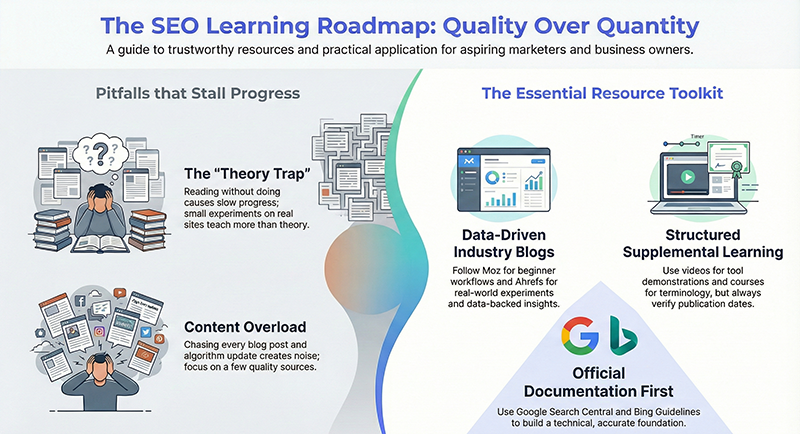
Many beginners struggle with SEO not because the material is too difficult, but because of how they approach learning. Relying only on articles or tutorials without applying knowledge can cause confusion, wasted time, and slow progress, even when using the best resources for learning SEO.
Chasing Every Update
Algorithm updates are important, but understanding the fundamentals of SEO matters even more. Without a strong foundation, frequent updates can become overwhelming and confusing, creating noise rather than clarity. Focusing on core principles first ensures that you can adapt to changes effectively and make informed decisions that improve your website’s performance.
Overloading on Content
Trying to read everything about SEO can quickly become overwhelming and confusing. Beginners often waste time jumping from one resource to another without building a solid understanding. Instead, focusing on a few high-quality, reliable resources is enough. This approach helps you learn more effectively, retain key concepts, and apply them with confidence in real-world projects.
Avoiding Hands-On Work
SEO only becomes truly effective when you actively test ideas yourself. Relying solely on reading or watching tutorials is not enough. Even small experiments, like tweaking a page title or adjusting content structure, can teach more than endless theory. Hands-on practice helps you understand how strategies actually work in real-world scenarios.
Learn SEO From the Right Sources
SEO isn’t something you finish learning—it’s a skill that improves over time with practice and observation. Many beginners look for shortcuts or quick fixes, but the best resources for learning SEO focus on helping you understand how search engines work, why certain strategies succeed, and how to evaluate advice critically. By using trustworthy guides, official documentation, and experience-based tutorials—the core of the best resources for learning SEO—you learn not just what to do, but why it works. Applying this knowledge to real projects builds confidence and practical skills. Focusing on the right sources makes SEO less confusing and more manageable. With patience, consistency, and curiosity, anyone can gradually become a competent SEO practitioner and make meaningful improvements to their websites