

Search engine optimization (SEO) is essential for growing your website’s visibility and attracting organic traffic. However, not all SEO strategies are ethical or effective in the long run. Black hat SEO refers to a set of techniques that attempt to manipulate search engine rankings by violating Google’s guidelines. These methods may seem appealing because they promise quick results, but they come with significant risks: search engine penalties, loss of rankings, damage to credibility, and long-term harm to your online presence.
For beginners, small business owners, and content creators, understanding black hat SEO is critical. Knowing what to avoid can protect your website while guiding you toward ethical strategies that deliver sustainable growth. In this guide, we’ll explore what black hat SEO is, common techniques used, the associated risks, how it compares with ethical white hat SEO, and actionable ways to avoid it.
What is Black Hat SEO?
Black hat SEO consists of strategies designed to gain search engine rankings by taking shortcuts rather than improving content quality or user experience. Unlike ethical SEO, which focuses on creating value, black hat SEO attempts to trick search engines into ranking pages higher than they naturally deserve.
The term “black hat” originates from hacker culture. In computing, a black hat hacker uses skills unethically, while a white hat hacker operates ethically to protect systems. Similarly, in SEO, black hat practices violate search engine rules, whereas white hat SEO follows ethical guidelines and prioritizes the user.
Search engines, particularly Google, actively discourage black hat SEO because it diminishes the quality of search results. Pages that mislead users or artificially inflate rankings may be penalized or completely removed from search results. While some black hat tactics can produce quick visibility, the consequences often outweigh short-term benefits.
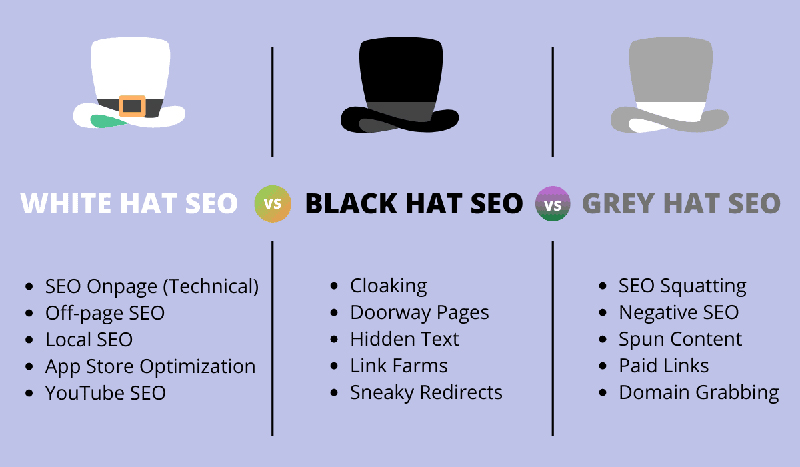
Common Black Hat SEO Techniques
Black hat SEO includes tactics that try to manipulate search engine rankings instead of improving user experience or content quality. While they may offer quick visibility, these methods are risky, unsustainable, and can lead to severe penalties. Even well-intentioned website owners can unknowingly fall into these practices, harming their credibility and rankings. Here are some of the most common black hat SEO techniques:
- Keyword Stuffing
Keyword stuffing is one of the most common black hat techniques. It involves overloading a webpage with keywords in an unnatural way to manipulate rankings. For example, a page might repeatedly use the phrase “buy cheap running shoes online” dozens of times in paragraphs, headings, and metadata. While it might temporarily improve rankings, keyword stuffing makes content unreadable, frustrates users, and is easily detected by Google’s algorithms. - Cloaking
Cloaking occurs when a website shows different content to search engines than it displays to users. For instance, a page might present keyword-rich text to Google but hide low-quality promotional content from visitors. This deceptive practice can mislead search engines and violates Google’s guidelines, often resulting in severe penalties. - Hidden Text and Links
Some sites use hidden text or links to include keywords without affecting user experience. This could involve white text on a white background or tiny text hidden in CSS. While it may seem harmless, search engines recognize this manipulation and can penalize the site, lowering rankings or removing pages from search results entirely. - Link Farming and Paid Links
Link farms are networks of low-quality websites created solely to generate backlinks. Paid links, meanwhile, involve buying backlinks to inflate a site’s perceived authority. Both practices attempt to manipulate Google’s ranking algorithm rather than earning natural backlinks through high-quality content. Search engines penalize websites caught using link farms or purchased links, and recovery can be slow and difficult. - Duplicate Content
Duplicate content involves copying existing content from other websites or repeating the same content across multiple pages within your site. It may temporarily boost rankings if it targets different keywords, but search engines often demote duplicated content, and it can harm your site’s reputation. - Private Blog Networks (PBNs)
PBNs are networks of sites built specifically to link back to a main website, increasing its authority artificially. While PBNs can initially improve rankings, Google actively targets these networks. Once detected, all websites within the network, including the main site, can face penalties. - Doorway Pages
Doorway pages are low-quality pages created solely to target specific keywords and funnel users to another page. They provide little or no real value, and search engines often consider them deceptive. Such pages are vulnerable to removal or ranking demotion.
These black hat tactics may promise short-term gains, but the long-term consequences, such as lost rankings, penalties, and reputational damage, are significant. Recovering from these penalties often requires extensive time, resources, and a complete overhaul of your SEO strategy.

Why Black Hat SEO is Risky
The risks of black hat SEO make it a dangerous approach, especially for beginners and small businesses seeking sustainable growth. Beyond just search penalties, black hat tactics can damage your brand’s reputation, reduce customer trust, and even result in permanent exclusion from search results. Here are the main reasons why black hat SEO is so risky:
- Short-term vs. Long-term Results
Black hat methods may bring quick boosts in visibility, but the effect is rarely lasting. This happens because search engines initially interpret manipulative tactics, like keyword stuffing or artificial backlinks, as signs of relevance. However, once algorithms re-crawl the site and detect unnatural patterns, they reclassify the content as low quality or deceptive. The result is a sudden drop in rankings that can leave a website performing worse than before. - Google Penalties
Search engines impose penalties in two ways:- Manual actions, which are applied by human reviewers who identify violations.
- Algorithmic penalties, triggered automatically by updates like Google’s Panda, Penguin, or Core Updates.
Recovering from either type of penalty can take months or even years, often requiring a complete SEO overhaul.
- Loss of Trust and Credibility
Users can easily recognize manipulative content such as keyword stuffing or doorway pages. This reduces trust and credibility, while other websites may avoid linking to you both of which weaken your SEO performance even further. - Examples of Sites Losing Rankings
Even large, established brands have faced serious setbacks because of black hat SEO. For example, J.C. Penney was penalized in 2011 after using link farms and saw its rankings collapse almost overnight. BMW’s German website was once deindexed for cloaking and doorway pages, while Overstock.com lost visibility after engaging in paid link schemes. Similarly, Rap Genius (now Genius) suffered a massive traffic drop in 2013 when Google penalized it for manipulative backlink exchanges. These cases prove that no site, big or small, is immune when it comes to violating search engine guidelines.
In the end, black hat SEO might look tempting for those chasing fast results, but the risks far outweigh the rewards. The short bursts of visibility are almost always followed by severe penalties, lost traffic, and long-term brand damage.
Black Hat SEO vs White Hat SEO
Comparing black hat and white hat SEO helps clarify why ethical strategies are safer and more effective.
| Aspect | Black Hat SEO | White Hat SEO |
| Focus | Manipulating rankings | Enhancing user experience and content value |
| Techniques | Keyword stuffing, cloaking, link farms, PBNs | High-quality content, natural backlinks, keyword clustering |
| Compliance | Violates Google’s guidelines | Fully aligned with Google’s SEO best practices |
| Risk | High – penalties, ranking loss | Low – sustainable growth and credibility |
| Results | Short-term and volatile | Long-term, stable, and authoritative |
White hat SEO emphasizes ethical practices that prioritize user value and site authority. While results may take longer, they are more sustainable and protect your website from penalties.
How to Avoid Black Hat SEO
Preventing black hat practices is crucial for long-term SEO success. Beginners and small business owners should adopt proactive measures to maintain ethical, effective strategies.
- Follow Google Search Essentials: Regularly review Google’s official guidelines and ensure your SEO tactics comply with best practices. Staying updated prevents accidental violations.
- Invest in Quality Content and Keyword Clustering: Focus on creating original, informative, and engaging content. Use keyword clusters to cover topics comprehensively, providing value to users without resorting to manipulation.
- Build Natural Backlinks: Earn links from reputable websites through guest posting, high-quality resources, and partnerships. Avoid buying links or using automated systems, which are often detected and penalized.
- Conduct Regular Site Audits: Monitor your website for hidden text, duplicate content, unnatural links, or other risky practices. Regular audits help identify potential violations early and allow corrective action before penalties occur.
By following these steps, you can maintain a safe, ethical SEO strategy that delivers sustainable rankings and long-term growth.
Conclusion
Black hat SEO may promise fast results, but it comes with serious risks: penalties, lost rankings, and reputational damage. For beginners, small business owners, and content creators, understanding these dangers is essential.
Instead of shortcuts, focus on white hat SEO strategies that prioritize content quality, user experience, and ethical link building. While these methods require patience and effort, they produce sustainable growth, higher trust, and lasting authority in search results.
Want to grow your rankings safely? Start with white hat SEO practices that build trust and authority.